Finding Meaning in "Pan con Tomate"

A meditation on food, philosophy and presence in the heat of the AI age
It’s 30 degrees in London and it’s too hot for me. The air is thick, i'll do anything to avoid the tube and my concentration is coming in bursts (what’s new?). All I want is something cold and familiar: pan con tomate, café con leche de avena and a large glass of iced water. Something simple and delicious, reminding me to slow down, care less and appreciate.
Beyond my craving, pan con tomate has become a theme in my life this week. I can’t stop eating it (with anchovies on top) and last night on the phone, my sister shared she’d been eating it too (sin anchoas). My algorithm also keeps serving me videos of food bloggers making it. What is this pan con tomate theme telling me?
Perhaps that I need to live simply or that I’m craving a quick-to-prepare wholesome bite of deliciousness, or a shared ritual, or simply a groundedness in our increasingly messy, fast-moving world.
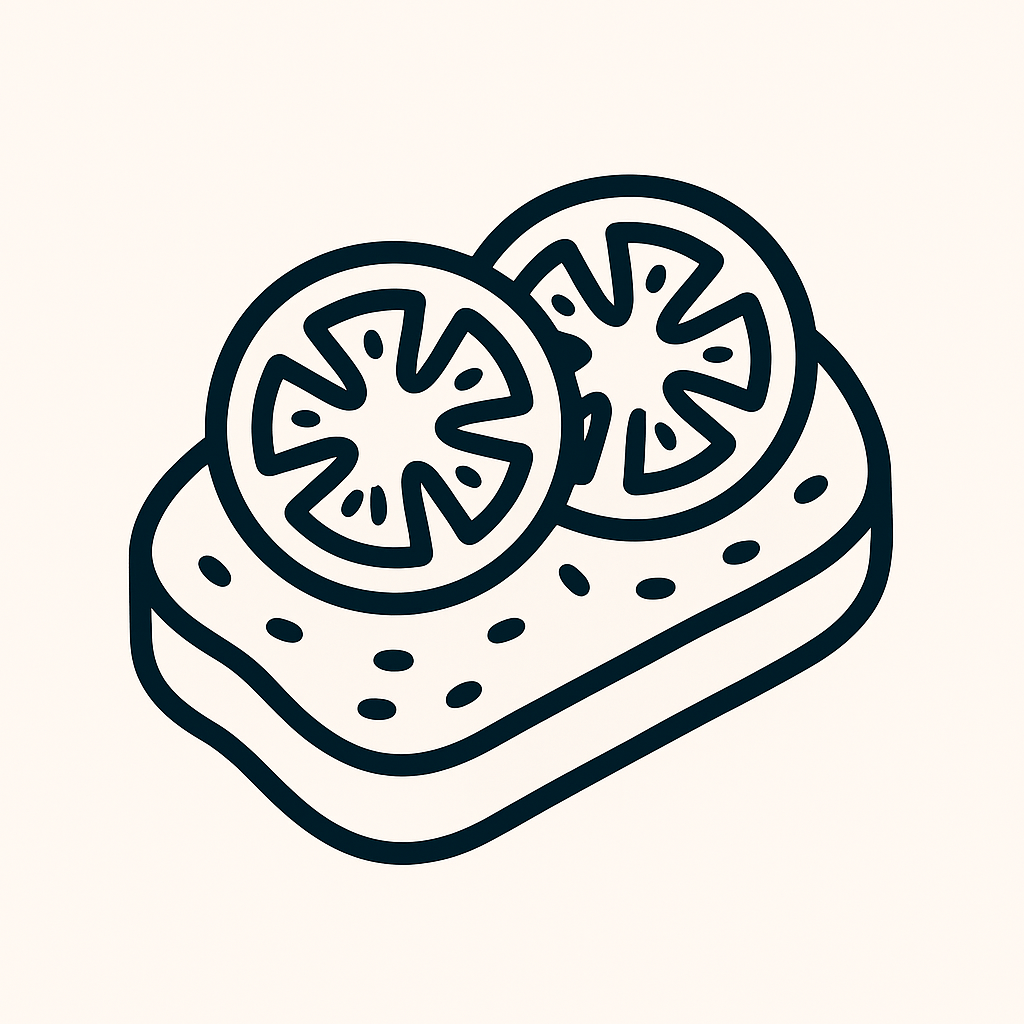
There’s something about pan con tomate - rustic bread, crushed tomato and good olive oil - that feels like so much more than food. It’s as much as what I want to eat in the heat as what I want to feel all the time: grounded, present and connected. In the rush of application deadlines, distractions and keeping up with new generative AI tools, pan con tomate feels like a small act of resistance – inviting my attention and meaning.
The philosophy of the tomato
Martin Heidegger (an influential 20th century German philosopher, whose work focused on being, time, presence and human existence) wrote about "dwelling" - being truly present in the world and not just passing through it. In that sense, preparing pan con tomate becomes a form of “dwelling”. I slice the bread, toast it just enough, rub the garlic, crush or blend the tomato, select and carefully align 5 anchovies and then drizzle the oil on top. It involves taking slow, small, sensory steps. There is no algorithm for this.
Simone Weil (an early 20th century French philosopher, mystic and political activist, whose ideas left lasting impacts on philosophy and education) believed that attention is the purest form of generosity. Preparing pan con tomate reminds me of this - I have to pay attention to the texture of the bread, the freshness of the tomato and the fragrance of the olive oil. The act of making something for myself and someone else with care and attention, becomes a gesture of connection in itself.
Connection, not content
In education, design and everyday life, we talk a lot about "content" - the materials, messages, and information we create – but this content won't necessarily guarantee us connection. Someone could have a fridge full of good ingredients and still not feel nourished if there is no thought or care behind the meal.
Pan con tomate quietly reminds me that meaning often comes from simplicity and the choice to not add more olive oil or garlic but to be more intentional and to care just enough.
Albert Camus reminds us that life can feel repetitive and absurd (waking up, going to work, eating, sleeping, repeating), but we must remember Sisyphus, condemned to pushing a boulder uphill forever and still finding meaning and even peace in the task itself. The ritual of preparing something familiar and nourishing, despite chaos, uncertainty or burnout, gives us some freedom. A way to say to ourselves: I am still here and I can still make something damn tasty.
A Mediterranean ethic
Mediterranean culture teaches us to value slowness, community and the table as a sacred space. The pan con tomate dish itself – born from scarcity – reflects a philosophy of care and appreciation for what you have. It's anti-waste, anti-rush and at the same time, a tiny piece of Epicurean joy: friendship, simple pleasures and the absence of pain or overthinking.
When I lived in Madrid and Italy several years ago, I began to understand this ethic more deeply. Meals weren’t rushed or multitasked and simple breakfasts came with time, conversation and presence. Food is sustenance, culture, connection and calm all in one. These lived experiences remind me and shape how I think about time, learning and sharing space with others.
Ortega y Gasset (a Spanish philosopher and cultural critic known for his reflections on individual identity and society), said, "I am myself and my circumstances." In other words, who we are is shaped by where we are and what surrounds us. Pan con tomate reflects this truth: the tomato tastes different in Catalunya than it does in Camden, but the meaning behind the act, notably the sharing, the care and the intention, remains the same. It’s a simple ritual that speaks a universal language of connection.
Semio-Semantics at the table
At Semio-Semantics, we’re interested in how meaning and connection show up in a world that’s increasingly shaped by AI. Pan con tomate captures this idea with striking clarity. AI might be able to write a recipe or plan a meal, but it cannot taste the tomato, feel the warmth of shared food or notice the quiet between two people eating together. This is the human part which really matters.
As we design, teach or create, especially in our rapidly-evolving digital world, let’s remember to make space for the simple, meaningful things. The real connection begins in slicing the bread, crushing the tomato and sitting down to share it with someone.
I now understand pan con tomate as both a current craving and a quiet philosophy. It is reminding me to slow down, to connect with people I love and with new acquaintances and to experience real prescence, simplicity and joy... with just enough olive oil.